If your child shows signs of a tomato allergy, it’s crucial to recognize the symptoms early. Hives, stomachaches, or even breathing difficulties can all indicate a reaction. Diagnosing this allergy involves specific tests, and understanding how to manage it is essential for your child’s safety. But what should you do when a reaction occurs? The answers may surprise you, especially when it comes to prevention and alternative food options.
Key Takeaways
- Symptoms of tomato allergy in children can include skin reactions, gastrointestinal distress, and respiratory issues, potentially leading to severe reactions like anaphylaxis.
- Diagnosis involves skin prick tests, blood tests for IgE antibodies, and sometimes oral food challenges under medical supervision.
- Management requires strict avoidance of tomatoes and education on reading labels for hidden ingredients, along with informing caregivers and staff.
- Relief for mild reactions includes antihistamines, while an epinephrine auto-injector is essential for addressing anaphylaxis.
- Foods to avoid include all forms of tomatoes, sauces, and products containing tomato paste, along with awareness of cross-reactive foods.
Symptoms of Tomato Allergy in Children

When it comes to tomato allergy in children, you might notice symptoms appearing within minutes of eating tomatoes.
Common skin reactions include hives, rashes, or eczema, which can be alarming. You may also observe gastrointestinal symptoms like abdominal cramps, nausea, vomiting, or diarrhea, especially after consuming tomato-based products.
Respiratory issues may arise, manifesting as coughing, sneezing, wheezing, or a runny nose. Additionally, children with a tomato allergy could experience oral allergy syndrome, causing itching or tingling in the mouth after eating raw tomatoes.
In severe cases, reactions can escalate to angioedema or even anaphylaxis, which requires immediate medical attention. Recognizing these symptoms is crucial for effective management and ensuring your child’s safety. Tomato allergy symptoms can vary widely among individuals, so it is important to monitor your child closely.
Diagnosis of Tomato Allergy
Diagnosing a tomato allergy in children requires a careful approach to ensure accurate results.
You’ll likely start with skin prick tests, where a small amount of tomato extract is applied to the skin to observe for allergic reactions. Additionally, blood tests measuring specific Immunoglobulin E (IgE) antibodies related to tomato proteins can help confirm the diagnosis.
An oral food challenge may also be conducted under medical supervision to directly assess your child’s reaction to tomatoes. Keeping a symptoms diary can assist your healthcare provider in identifying patterns related to tomato consumption and potential allergic reactions.
Accurate diagnosis is essential to avoid severe allergic reactions and develop appropriate management strategies for your child.
Management Strategies for Tomato Allergy
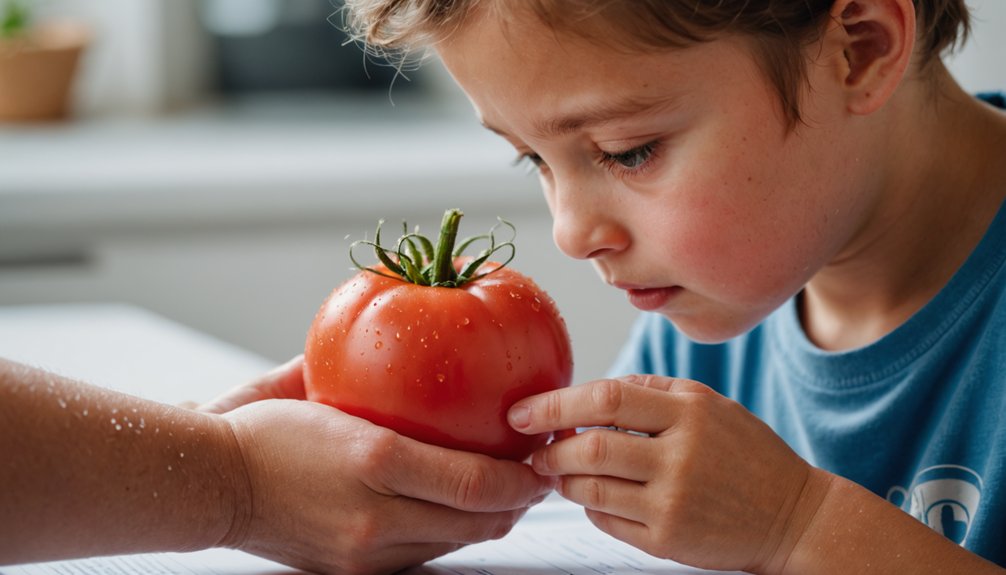
Managing a tomato allergy in children primarily revolves around strict avoidance of tomatoes and tomato-based products.
Strict avoidance of tomatoes and tomato-based products is essential for managing a tomato allergy in children.
You’ll need to educate yourself and your child about reading food labels to avoid hidden tomato ingredients in processed foods like ketchup and soups.
Inform school staff and caregivers about your child’s allergy to ensure they can help manage potential exposure.
Keep a symptoms diary to track reactions, which can assist healthcare providers in creating a personalized treatment plan.
Always have an epinephrine auto-injector on hand for severe allergic reactions or anaphylaxis.
For mild symptoms, antihistamines can provide relief.
Following these management strategies will help you and your child navigate daily life safely and confidently.
Relief Options for Allergic Reactions
If your child experiences an allergic reaction to tomatoes, knowing the right relief options can make a significant difference. Here are some effective strategies to consider:
- Over-the-counter antihistamines like cetirizine or loratadine for mild allergic reactions.
- Epinephrine auto-injector for severe symptoms, which can quickly reverse anaphylaxis.
- Topical steroid creams to reduce inflammation and itching from skin reactions.
- Cold compresses to provide immediate comfort and relief from swelling.
- Seek medical attention if your child has respiratory symptoms like wheezing or difficulty breathing.
Risk Factors for Tomato Allergy

Understanding the risk factors for tomato allergy can help you take proactive steps to protect your child.
Children with a family history of allergies, especially food allergies, are at a higher risk of developing a tomato allergy. Exposure to other allergens, like grass pollen, can also increase susceptibility due to potential cross-reactivity.
Young children are generally more prone to food allergies than adults, making them particularly vulnerable. Additionally, direct contact with tomatoes or inhalation of tomato particles can trigger allergic reactions in sensitive kids.
Conditions such as eczema may further predispose children to develop food allergies, including tomato allergy. Recognizing these risk factors allows you to monitor your child’s health closely and seek appropriate guidance.
Preventing Tomato Allergy Reactions
To effectively prevent tomato allergy reactions in children, it’s essential to take proactive measures that limit their exposure to tomatoes and tomato-based products. Here are some key strategies:
Proactively limiting exposure to tomatoes is crucial for preventing allergic reactions in children.
- Educate caregivers and teachers about the child’s tomato allergy and how to respond to an allergic reaction.
- Read food labels carefully to spot any tomato derivatives or cross-contaminants before allowing children to eat.
- Encourage children to communicate their allergy to peers and adults, especially during meals.
- Keep an epinephrine auto-injector accessible at all times for emergencies.
- Train responsible adults on how to use the auto-injector and recognize symptoms of an allergic reaction.
Foods to Avoid With Tomato Allergy
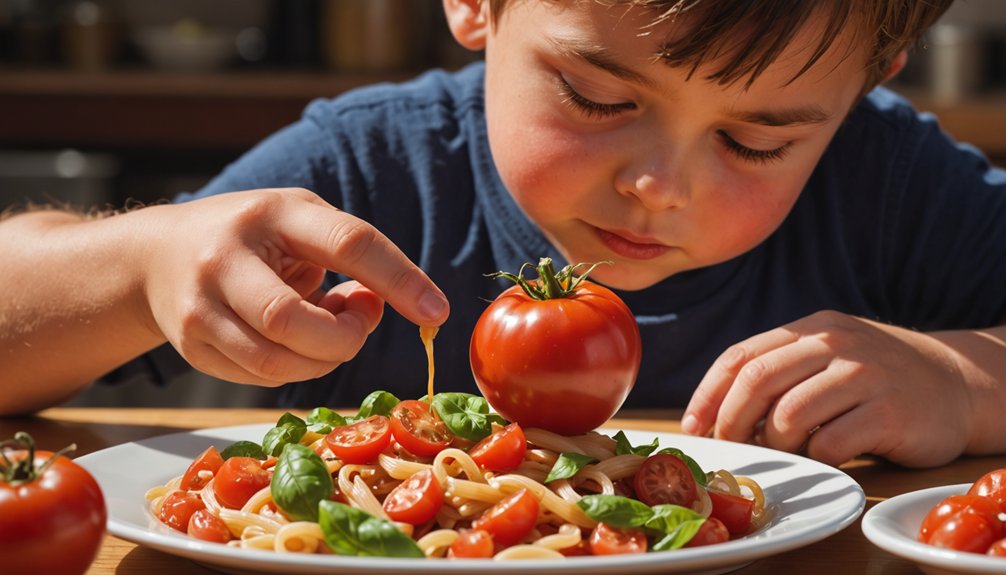
When managing a tomato allergy in children, it’s crucial to avoid all forms of tomatoes, including raw, cooked, and processed varieties.
You’ll want to steer clear of foods to avoid like ketchup, tomato sauces, and canned soups, as they often contain hidden tomato ingredients. Always check labels for items like tomato paste and puree, which can trigger symptoms of an allergic reaction.
Additionally, be mindful of cross-reactive foods such as bell peppers and eggplants, as they may provoke similar responses.
Educating caregivers, teachers, and restaurant staff about your child’s tomato allergy is vital for ensuring safe meal options.
Consider using substitutes like Alfredo or béchamel sauce to keep meals enjoyable while avoiding any risks associated with tomatoes.
Alternative Ingredients and Recipes
Cooking without tomatoes can be a creative adventure, offering plenty of delicious alternatives to keep meals exciting. You can explore various tomato-free options that bring out creamy flavors and vibrant tastes in your dishes.
Exploring tomato-free cooking opens up a world of creamy flavors and vibrant tastes, making meal preparation an exciting adventure.
Here are some great alternative ingredients to consider:
- Bechamel sauce for a rich pizza or pasta base
- Roasted red peppers for depth and sweetness
- Pureed squash to add a creamy texture
- Fresh herbs like basil and oregano to enhance the flavor profile
- Japanese-style pasta sauce made with carrots, beets, and miso for a unique twist
With these recipes, you’ll create satisfying meals that everyone can enjoy, even without tomatoes!
Conclusion
In conclusion, if your child has a tomato allergy, staying informed and proactive is key. Monitor for symptoms and consult with your healthcare provider for accurate diagnosis and management strategies. Avoiding tomatoes and reading food labels carefully will help prevent allergic reactions. Always have relief options ready, like antihistamines or an epinephrine auto-injector, just in case. With the right approach, you can keep your child safe and healthy while navigating their dietary needs.